Product Description
Aluminium Alloy Pipe are widely used across industries due to their light weight, excellent corrosion resistance, good strength-to-weight ratio, and versatility. They are typically manufactured through extrusion, welding, and heat treatment processes and can be further treated with surface treatments such as anodizing and powder coating to enhance performance and aesthetics. The offered pipes are weldable, machinable, extrudable, and formable, making them versatile for various manufacturing processes. Aluminium Alloy Pipe come in various grades, with each alloy offering unique benefits tailored to specific applications. Furthermore, you can avail these pipes at nominal rates.
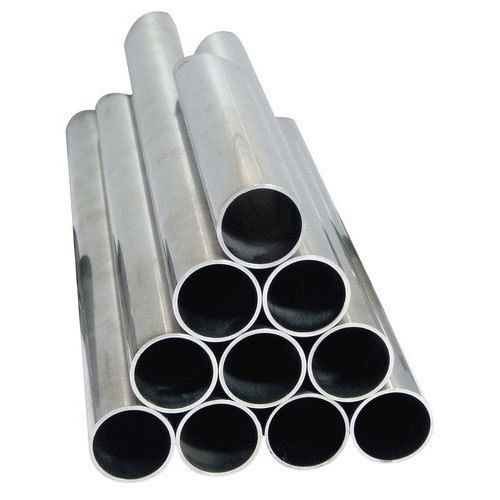
Exceptional Quality and PerformanceThese Aluminium Alloy Pipes boast high strength, medium hardness, and a polished, smooth silver finish. Manufactured under strict ASTM B241 and EN 755 standards, their lightweight yet durable nature makes them a preferred choice for demanding industrial and architectural applications. The material's inherent corrosion resistance ensures long-lasting performance, even in challenging environments.
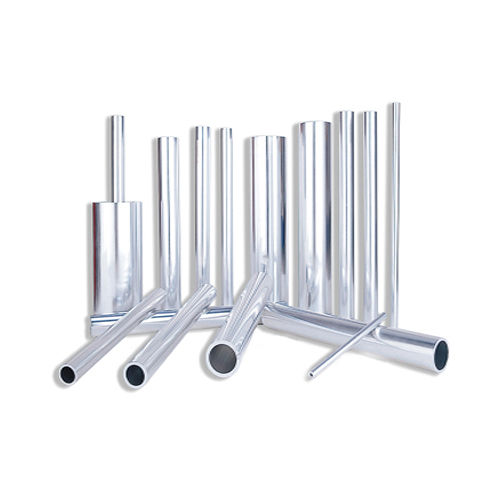
Customizable Dimensions and Versatile ApplicationsLength, width, and cross-dimensions are fully customizable, allowing seamless integration into a variety of projects. Suitable for use in construction, architecture, industrial piping, and furniture, these pipes meet the specific requirements of each sector while offering superior machinability and weldability for diverse fabrication processes.
Trusted Manufacturer, Exporter, and Supplier in IndiaAs a leading manufacturer, supplier, and exporter in India, we provide Aluminium Alloy Pipes in a wide range of sizes (outer diameter: 10 mm - 250 mm; thickness: 2 mm - 20 mm) and customized lengths. Our commitment to quality is reflected in each product, ensuring reliability and satisfaction for clients across the globe.
FAQ's of Aluminium Alloy Pipe:
Q: How are Aluminium Alloy Pipes manufactured and what is the fabrication process?
A: Our Aluminium Alloy Pipes are produced using the extrusion process, ensuring uniform shape and high strength. The process follows both ASTM B241 and EN 755 standards, resulting in precise tolerances and smooth finishes. Each pipe undergoes surface treatment for a polished, rust-resistant appearance.
Q: What benefits does the 6000 series aluminium alloy offer for piping applications?
A: The 6000 series, particularly grades 6061 and 6063, provides a blend of high strength, medium hardness, and excellent corrosion resistance. This makes the pipes lightweight, durable, and suitable for demanding construction, architectural, and industrial uses.
Q: When should I consider using anodized Aluminium Alloy Pipes?
A: Anodized Aluminium Alloy Pipes are ideal when additional surface protection or decorative finishes are required. The anodizing process enhances corrosion resistance, wear resistance, and aesthetic appeal, making them well-suited for exposed applications in architecture and furniture.
Q: Where can these aluminium pipes be used effectively?
A: These pipes are highly versatile, finding effective use in construction frameworks, architectural facades, industrial piping systems, and modern furniture designs due to their strength, durability, and customizable sizing.
Q: What is the typical tolerance and how does it benefit industrial projects?
A: With a tight tolerance of 0.1 mm, these pipes ensure precise dimensions. This facilitates accurate assembly and integration in complex projects, reducing the need for additional machining and improving overall efficiency.
Q: How do the pipes perform under heat and harsh environments?
A: The pipes are heat resistant up to 200C and exhibit excellent corrosion resistance, making them reliable for both high-temperature and challenging environmental conditions. Their smooth, polished surface further protects against rust and wear.
Q: Can I order pipes in custom sizes and lengths for my project?
A: Yes, we offer full customization options for length, width, thickness, and cross-dimensions to meet your project's requirements. This flexibility allows you to obtain pipes tailored precisely to your application, optimizing both material usage and structural performance.





 Send Inquiry



 English
 Spanish
 French
 German
 Italian
 Chinese (Simplified)
 Japanese
 Korean
 Arabic
 Portuguese